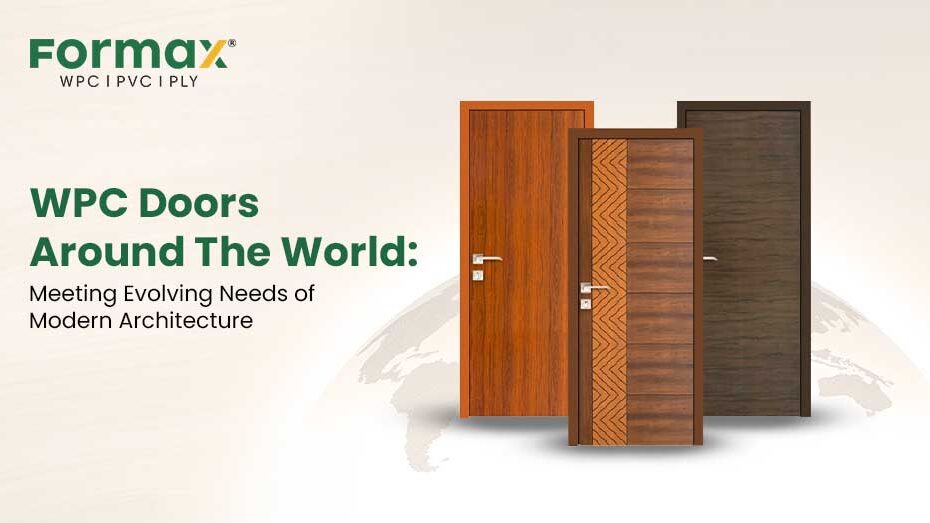
A new generation of doors for modern buildings
Door selection has become far more than an aesthetic decision. Architects, developers and project consultants now evaluate doors based on durability, sustainability, lifecycle cost and suitability for specific environments.
As construction practices evolve across residential, commercial and institutional sectors, Wood Plastic Composite (WPC) doors are gaining wider acceptance in global markets. Combining the appearance of wood with the performance characteristics of engineered materials, WPC doors are addressing many of the limitations associated with conventional timber products. Their growing adoption reflects changing architectural priorities rather than simply changing material preferences.
Architects’ choice: WPC doors
Modern buildings demand materials that can withstand varying climatic conditions while requiring minimal maintenance. Unlike conventional wooden doors that may warp, swell or become vulnerable to termites and moisture over time, WPC doors offer dimensional stability, water resistance and improved durability. Many products are also fire-retardant, recyclable and designed for long service life. These characteristics make them suitable for projects where performance is as important as appearance.
Applications across global markets
The versatility of WPC doors has expanded their use well beyond residential homes. Commercial offices increasingly specify them for interiors where durability and consistent appearance are important. Hotels value their ability to withstand heavy daily usage while maintaining aesthetic appeal.
Healthcare facilities benefit from surfaces that resist moisture and are easier to maintain. Educational institutions, retail developments and public infrastructure projects also favour engineered door solutions because of their lower maintenance requirements and longer lifecycle. As urbanization accelerates worldwide, demand continues to grow for materials that balance functionality with architectural design.
Design flexibility drives broader acceptance
Architects today seek materials that provide creative freedom without compromising performance. Modern WPC doors are available in CNC-routed designs, textured finishes and digitally printed surfaces that replicate natural wood while offering greater consistency and durability. This enables designers to achieve contemporary or traditional aesthetics while benefiting from engineered performance.
The combination of design flexibility and structural reliability has made WPC suitable for projects ranging from premium residences to large commercial developments.
Sustainability concerns behind material choices
Environmental considerations are becoming an important part of construction decisions. Engineered materials that reduce dependence on natural timber and offer recyclability are receiving increased attention from developers and consultants pursuing sustainable construction practices. WPC products align with this shift by supporting efficient use of resources while maintaining performance expectations.
Building for performance and longevity
As construction projects become more demanding, the choice of building materials increasingly depends on long-term value rather than initial cost alone. WPC doors have established themselves as practical solutions that combine durability, aesthetics and sustainability for diverse architectural applications.
Manufacturers such as Formax are contributing to this transition by developing engineered WPC door solutions that respond to the evolving expectations of architects, builders and developers, helping create buildings designed to perform well for years to come.