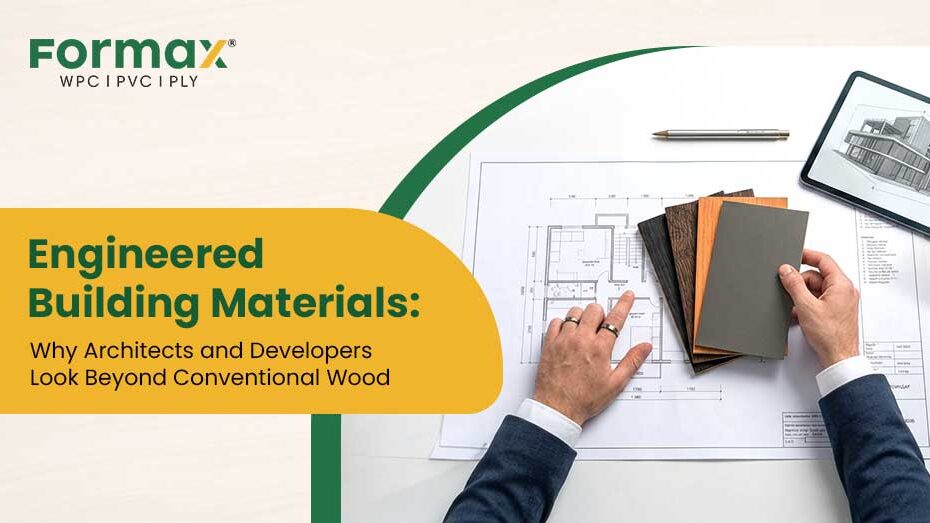
Construction materials entering a new phase
The construction industry has always evolved alongside changing architectural needs. While natural wood has traditionally been a preferred material for interiors and furniture applications, modern projects demand materials that offer greater consistency, durability and performance. Increasing environmental awareness, rising maintenance costs and changing customer expectations are encouraging architects and developers to explore engineered alternatives.
Materials such as WPC boards, PVC foam boards and other advanced panels are gaining importance because they combine design flexibility with practical advantages required in contemporary construction.
Changing expectations from building materials
Earlier, material selection was often driven primarily by appearance and availability. Today, project teams evaluate materials across multiple parameters including lifecycle cost, durability, resistance to environmental conditions and ease of installation.
Commercial buildings, hospitality projects, healthcare facilities and residential developments require materials that can withstand daily usage while maintaining their appearance over time. Engineered materials are addressing these requirements by offering predictable performance and consistent quality.
Advantages of engineered materials in modern construction
One of the biggest advantages of engineered materials is their ability to overcome limitations associated with conventional materials. Natural wood, while aesthetically appealing, can be affected by moisture, termites, temperature changes and maintenance requirements.
Engineered alternatives are designed to provide better resistance against such challenges. WPC boards and related products offer advantages such as moisture resistance, termite resistance, dimensional stability and longer service life. For developers and contractors, this translates into reduced maintenance requirements and improved project reliability.
Supporting sustainable construction practices
Sustainability has become a major consideration in construction decisions. Architects and developers are increasingly looking for materials that support responsible resource utilization while meeting performance expectations.
Engineered materials can contribute to sustainable construction by reducing dependence on natural timber and offering longer product lifecycles. As green building practices become more widespread, material choices are becoming an important part of overall project sustainability strategies.
Design flexibility for architects
Modern architecture demands both functionality and visual appeal. Engineered panels and boards provide architects with greater flexibility in terms of finishes, textures and applications. They can be used across interior spaces, partitions, furniture, doors and other design elements.
This allows designers to achieve desired aesthetics while selecting materials that perform well under different conditions. The ability to combine design freedom with technical advantages is one of the reasons engineered materials are finding wider acceptance.
Impact on project execution and procurement
For builders and contractors, material consistency plays an important role in project timelines. Engineered products are manufactured under controlled processes, ensuring uniformity across large-scale projects. This helps reduce variations, minimise wastage and support smoother installation. For procurement teams, factors such as availability, quality consistency and lifecycle value are becoming increasingly important while selecting construction materials.
The future belongs to smarter material choices
The construction industry is moving towards materials that offer a balance between aesthetics, performance and sustainability. Engineered building materials are not replacing design possibilities; instead, they are expanding them by providing architects and developers with more reliable options for modern projects.
Companies such as Formax are part of this evolving construction ecosystem, providing engineered material solutions that support the changing requirements of architects, contractors and businesses looking for durable and practical building choices.